
When a student says "I'm getting better at math," what does that actually mean? Can they solve more problem types? Do they understand concepts more deeply? Are they more confident when facing unfamiliar challenges?
For the past six months, I've been tracking these dimensions in my own notes after every MMP session. I've watched patterns emerge, seen breakthroughs happen, and identified exactly where students need more support. Now, I'm making that tracking visible to students and parents through an upgraded MMP dashboard system.
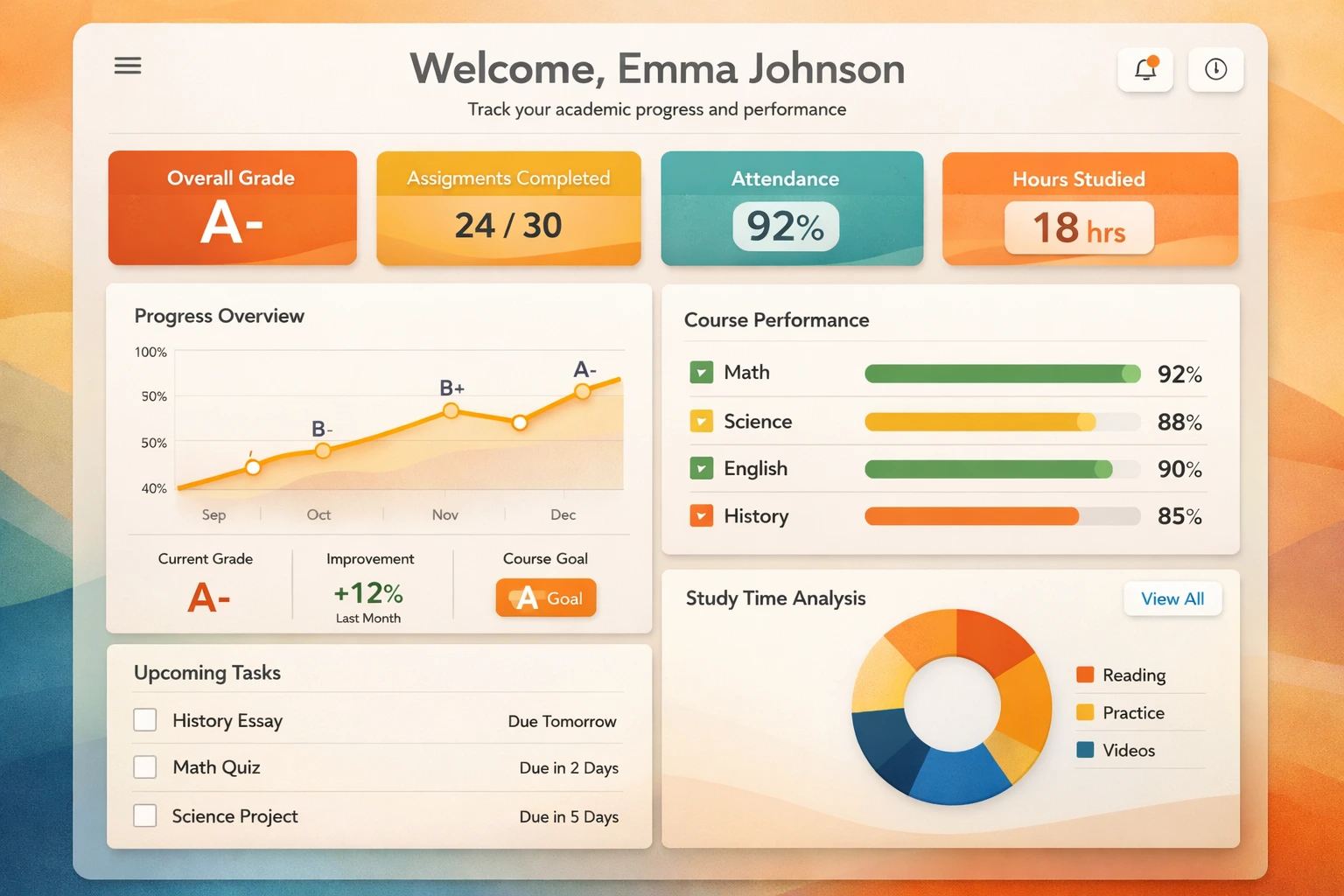
What's Changing
Starting this week, the MMP dashboard is getting a significant upgrade. Here's what's new:
- Enhanced progress snapshots after every session with clearer insights
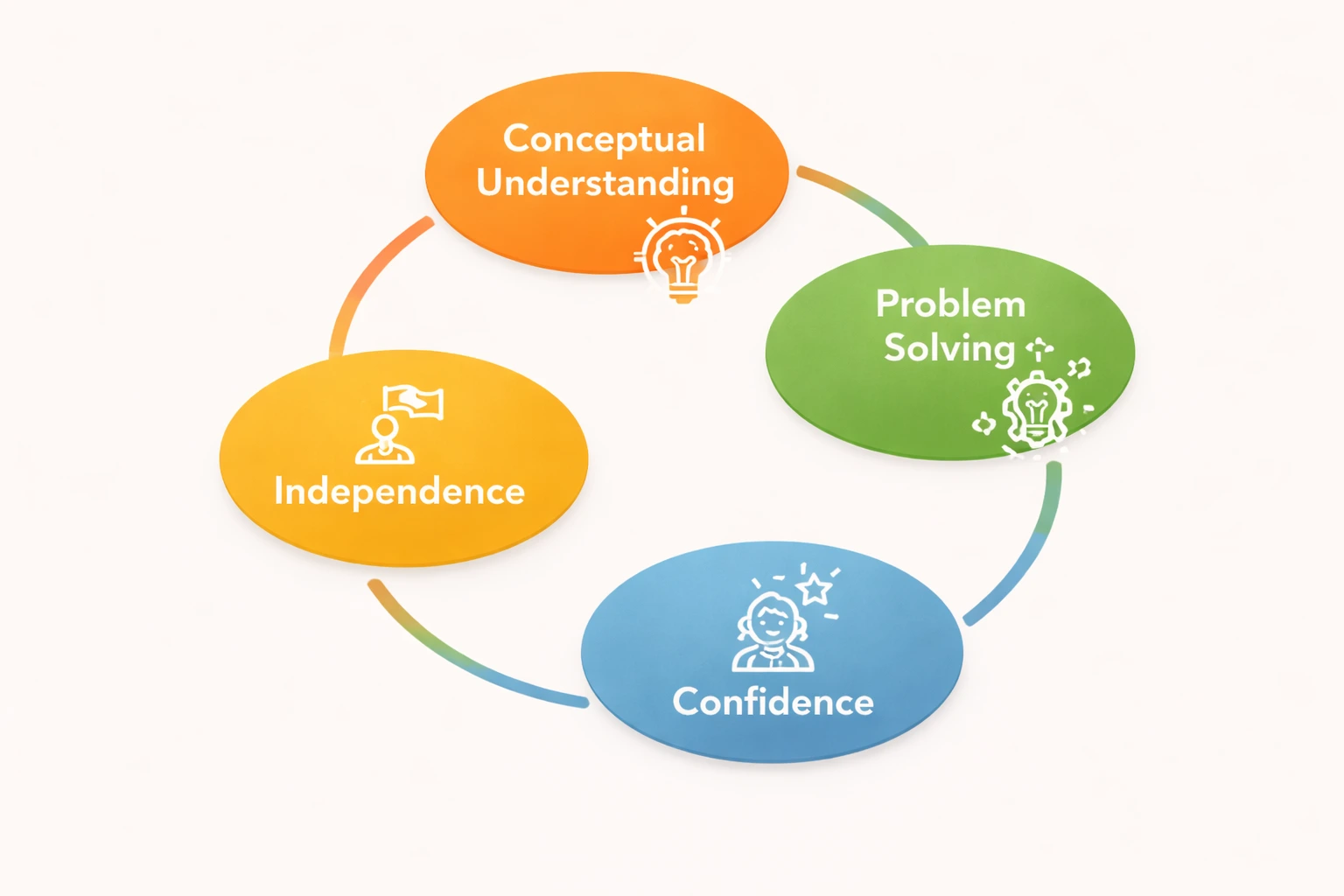
- Four-dimension tracking measuring what truly matters in mathematical development
- Monthly comprehensive summaries reviewing trajectory and highlighting patterns
- Structured checkpoint conversations at 1, 3, and 6 months to evaluate fit and progress
These aren't cosmetic changes. This upgrade reflects how I've been thinking about student development all along—now made transparent and accessible to everyone involved.
Why These Four Dimensions Matter
Mathematical development isn't one-dimensional. A student who can solve problems mechanically but doesn't understand why the methods work is fragile. A student who understands concepts but freezes when facing unfamiliar challenges hasn't developed problem-solving capability. True mathematical growth happens across multiple dimensions simultaneously.
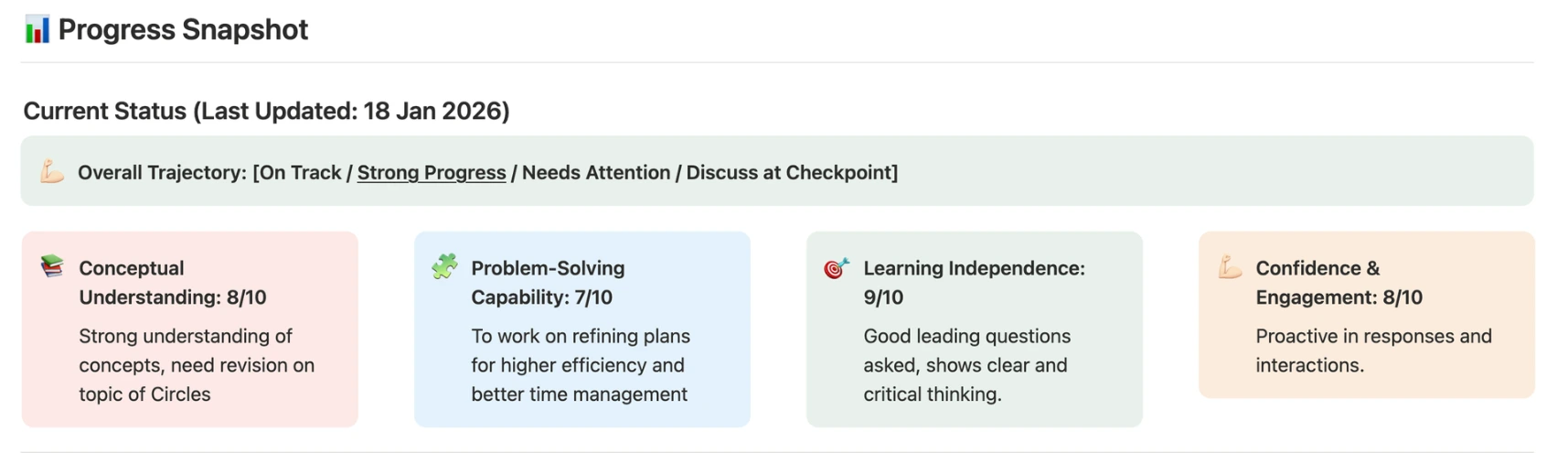
📚 Conceptual Understanding
This measures whether a student truly grasps the mathematical ideas, not just the procedures.
What it means: Can the student explain why a method works? Do they see connections between different topics? Can they apply concepts to new situations?
Why it matters: Procedural fluency without understanding is brittle. It breaks down when problems are presented differently or when concepts need to transfer to new contexts. Deep understanding creates flexibility and resilience.
What development looks like: A student moves from "I follow the steps" to "I understand why these steps work" to "I can modify this approach when the problem changes."
🧩 Problem-Solving Capability
This tracks how systematically a student approaches unfamiliar challenges using the Masterplan framework.
What it means: When faced with a problem they haven't seen before, does the student have a systematic approach? Can they break down complex problems? Do they know how to extract information and formulate a plan?
Why it matters: Mathematics isn't about memorizing solutions—it's about developing systematic thinking that transfers across problems, subjects, and life. The Masterplan framework (Questions -> Diagram -> Plan -> Statement -> Solve -> Check) gives students a reliable process for tackling any challenge.
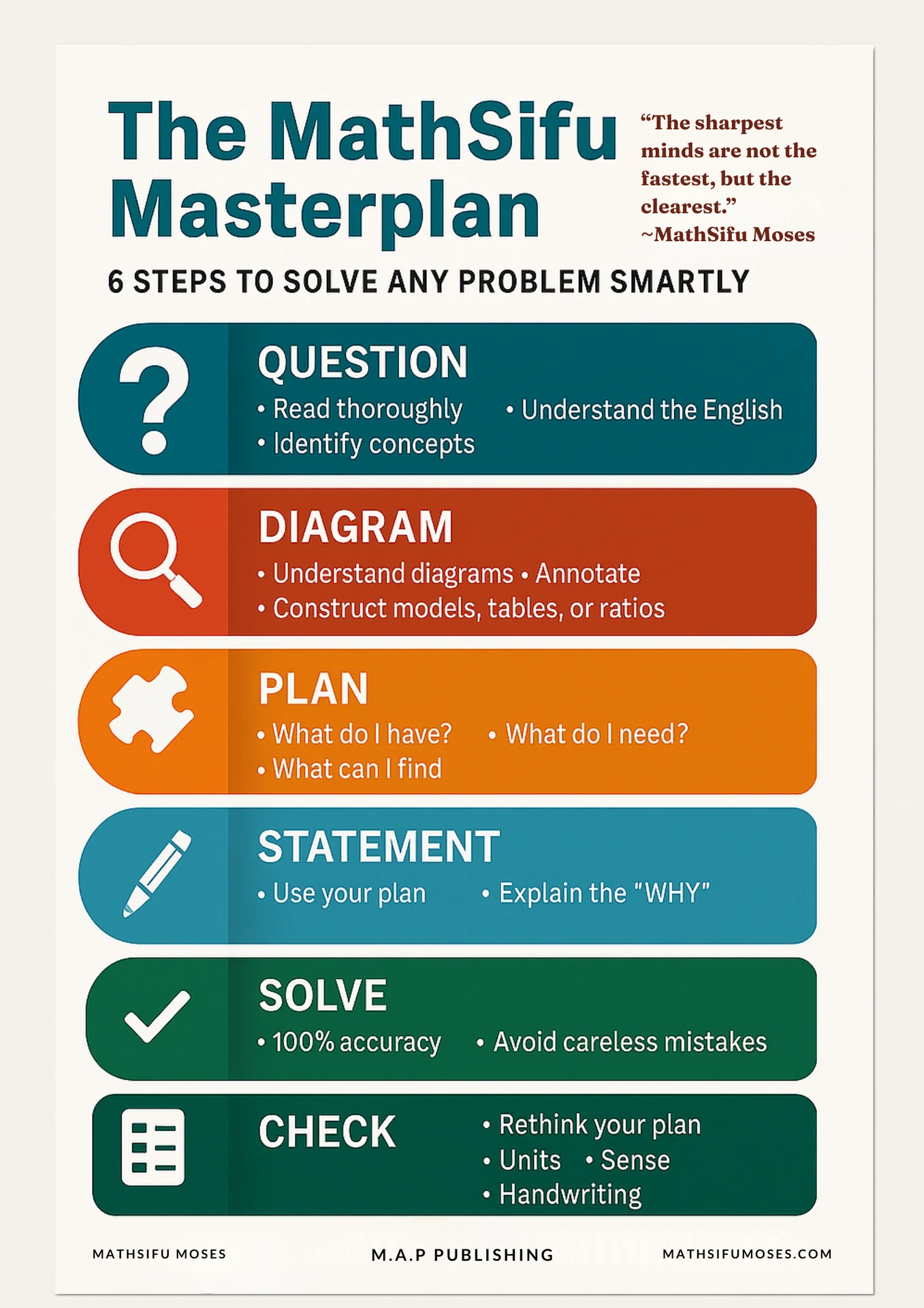
What progression looks like: From "I don't know where to start" to "Let me break this down systematically" to independently applying the framework without prompting.
🎯 Learning Independence
This dimension measures how much scaffolding a student needs and how well they self-direct their learning.
What it means: Can the student identify what they don't understand? Do they ask effective questions? Can they work through challenges with minimal guidance? Do they take ownership of their learning process?
Why it matters: The ultimate goal isn't dependence on a tutor—it's developing students who can learn independently. This skill determines success not just in mathematics, but in any field they pursue.
What it looks like in practice: A developing student moves from needing step-by-step guidance to asking targeted questions to catching their own mistakes to extending concepts on their own.
💪 Confidence & Engagement
This tracks a student's mathematical self-efficacy and their relationship with learning.
What it means: Does the student believe they can improve? Are they willing to tackle difficult problems? Do they persist through challenges? Are they engaged with the material?
Why it matters: Confidence and engagement are often overlooked, but they affect everything else. A student who believes "I'm just not a math person" will struggle to develop conceptual understanding or independence, no matter how capable they actually are. Shifting this mindset unlocks potential.
What shift looks like: From avoidance and anxiety to curiosity to genuine engagement to seeking out challenges.
How the System Works
The upgraded dashboard operates on three levels:
After Every Session: Your dashboard updates with a progress snapshot. This captures what we worked on, what developed, and what's emerging as the next focus area. These aren't just session notes, they're tracking progression across all four dimensions.
Monthly Summaries: Once a month, you'll receive a comprehensive summary reviewing the trajectory. This connects the dots between individual sessions, highlights patterns, identifies breakthrough moments, and sets direction for the coming month.
Structured Checkpoints: At 1, 3, and 6 months, we'll have scheduled checkpoint conversations. These aren't casual check-ins - they're structured evaluations of fit and progress. We'll review development across all dimensions, discuss whether MMP continues to be the right fit, and make any necessary adjustments.
What This Means for Current MMP Students
If you're currently in MMP, your dashboard will be upgraded over the next week. Here's what you'll see:
- Current progress status based on your recent sessions across all four dimensions
- Backfilled summaries reflecting your work over recent weeks
- Your checkpoint schedule based on when you started MMP
Nothing changes about how sessions work—just better visibility into what's developing. You'll have clearer insight into your strengths, your growth areas, and the trajectory you're on.
The tracking I've been doing in my notes is now visible to you. That's the only change.
The Philosophy Behind This Upgrade
This upgrade reflects several core beliefs about learning:
Autonomy requires visibility. Students can't take ownership of their learning if they can't see where they are and where they're going. Transparency empowers self-direction.
Growth happens when it's measured. What gets tracked gets developed. By making these four dimensions explicit, we focus attention on what actually matters—not just "getting through content" but developing lasting mathematical capability.
Accountability serves everyone. When progress is visible, everyone stays accountable - students to their own development, parents to their investment, and me to delivering meaningful outcomes. Transparency raises standards.
Trust is built through clarity. You shouldn't have to wonder whether MMP is working. You should be able to see evidence of development—or its absence—clearly and regularly. That clarity allows for better decisions by everyone involved.
Moving Forward
The MMP dashboard upgrade represents a commitment to transparency, accountability, and genuine development. It's not about making things look better, it's about making what's actually happening visible.
Over the coming weeks, you'll see your dashboard populate with insights from our sessions. Monthly summaries will start arriving. Checkpoint conversations will be scheduled. And most importantly, you'll have clear visibility into mathematical development across the dimensions that actually matter.
Questions about your upgraded dashboard? Your next monthly summary? How checkpoints work? Message me anytime.
I'd love to hear your thoughts on this upgrade. What would make progress tracking even more valuable for you?
MMP (MathSifu Mentorship Pass) is MathSifu's flagship tutoring program focused on developing deep mathematical understanding and systematic problem-solving capability.